The Cheesecake Factory
More ways to order & enjoy.
Overview
The Cheesecake Factory, like many companies, has continued to evolve with the ever-changing demands of customers. For restaurants, this means increased options for personalized service and dining on their terms: making reservations, and ordering takeout & delivery—plus being able to accomplish these tasks online or via mobile.
Services
- UX research
- Competitive analysis
- Information & UX architecture
- Wireframing & prototyping
- Visual design
The project
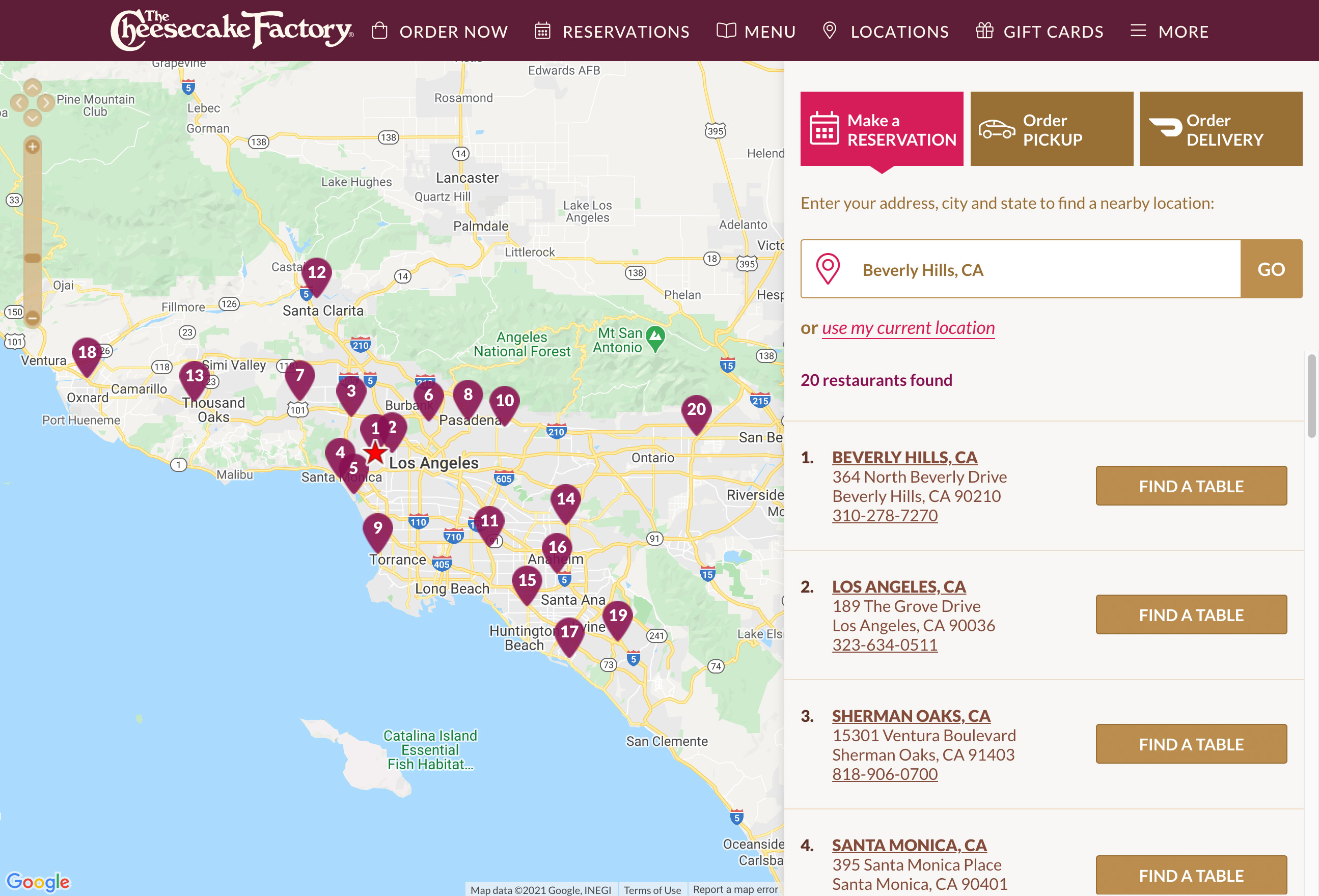
A unified, consolidated page from which guests can order online or make a reservation.
It sounds fairly straightforward. But, it turned out to be surprisingly novel.
This portal began its life quite differently: a landing page for delivery and a near-separate landing page for reservations. Driving the need for a landing page wasn't simply the guest need, but also a destination for online advertising.
But separate landing pages are confusing. And how does one get from one to another? What if they change their mind midway through the process?
Plus—guests have been asking for the ability to make a reservation at The Cheesecake Factory for years. Why not leverage existing traffic to advertise the new feature?
Competitive Analysis
I began by doing a fairly quick competitive analysis. I focused on other national, upscale casual dining restaurants who offered all three: reservations, takeout, and delivery and had locations in similar enough markets.
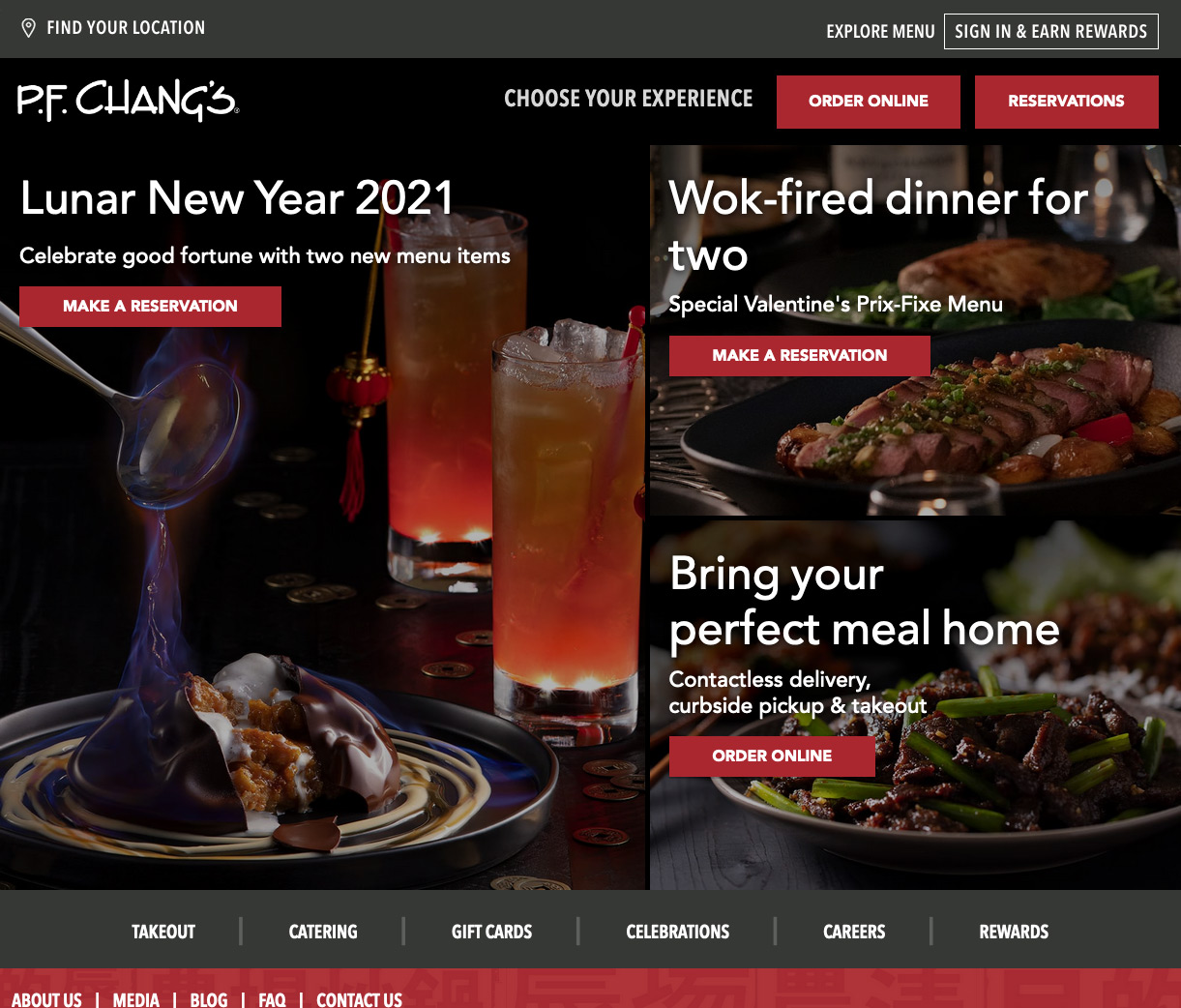
Ultimately, I elected to evaluate P.F. Chang's, Maggiano's Little Italy, and Brio Italian Grille.
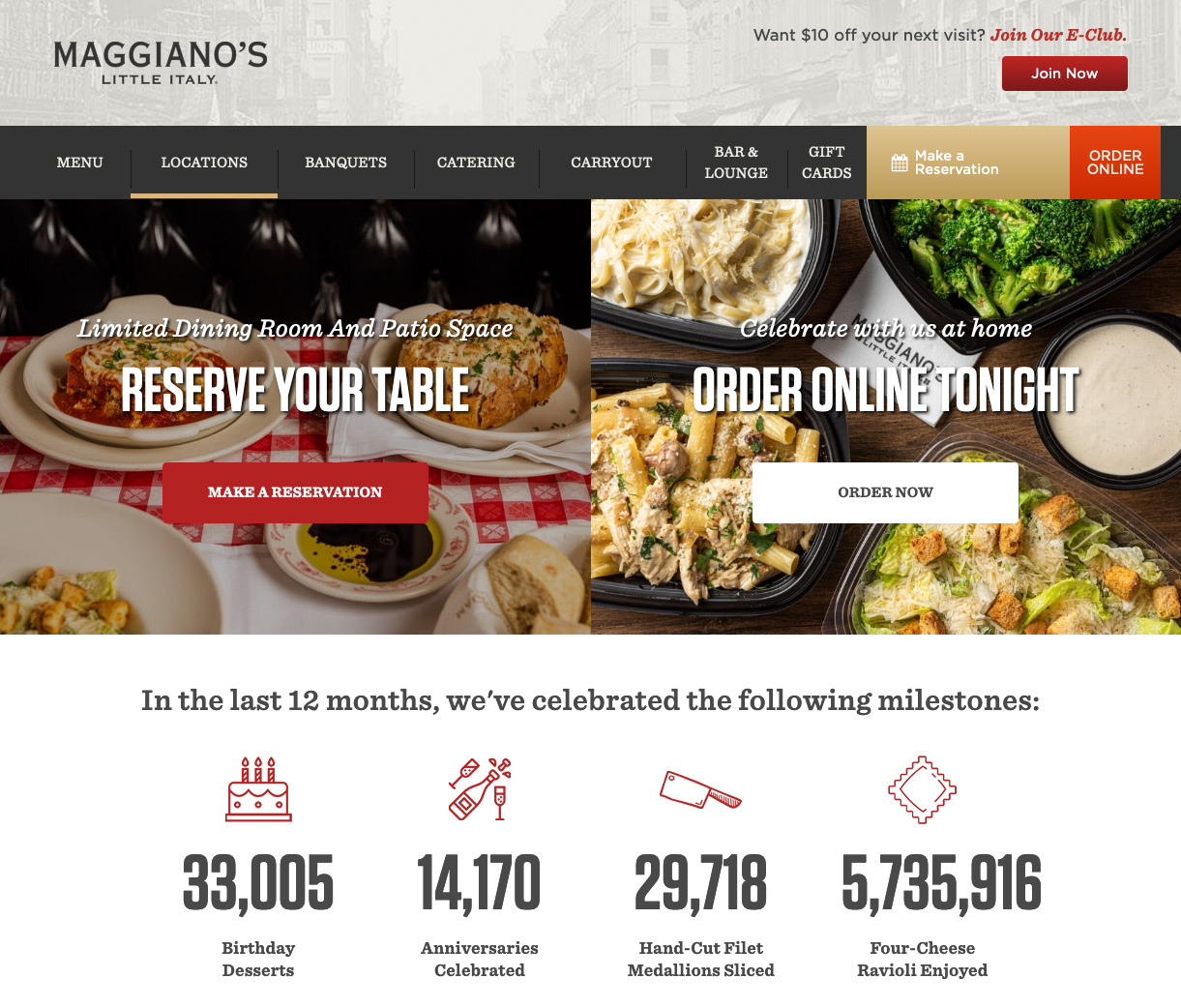
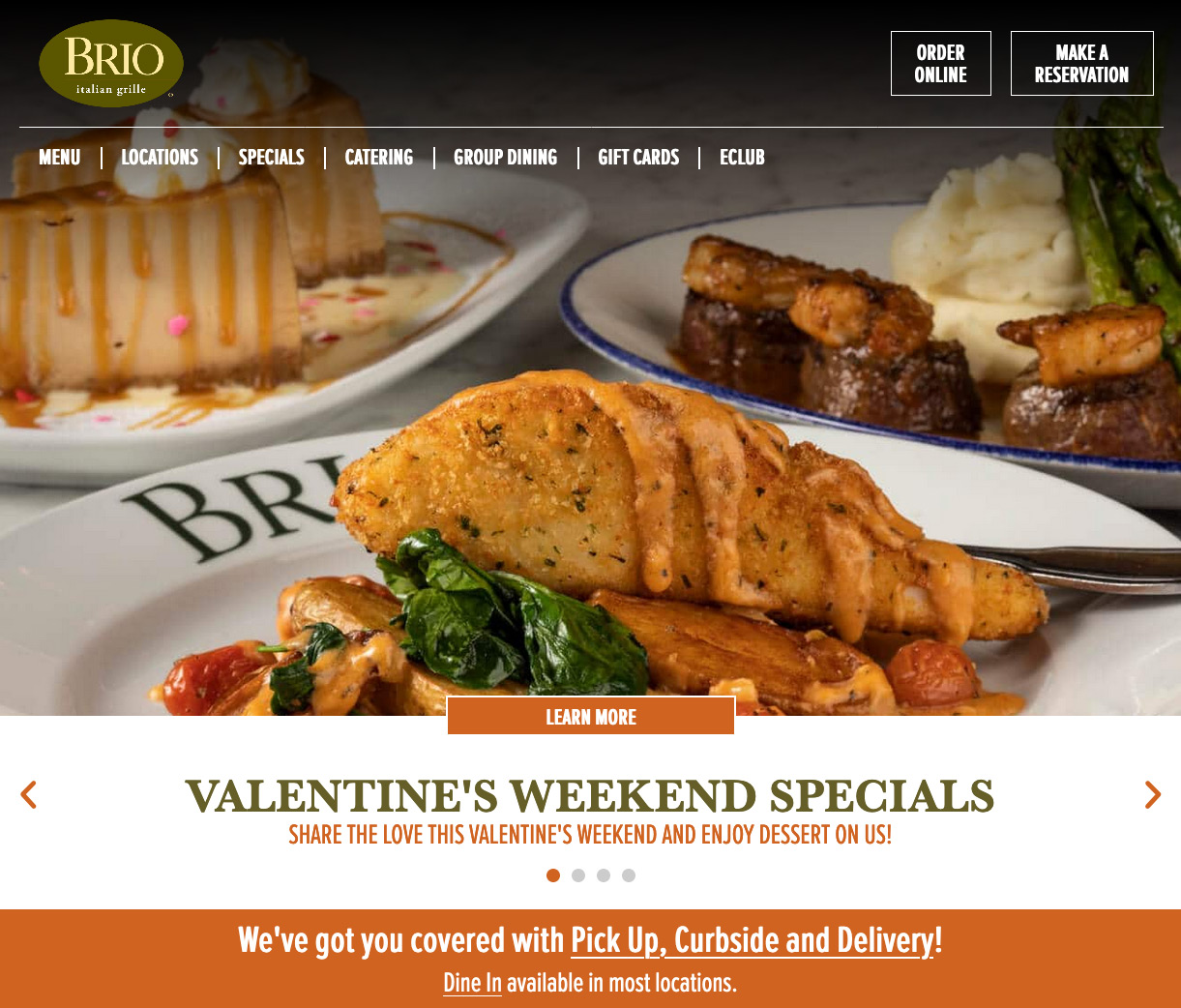
Findings
The findings were fairly consistent: all three restaurants offered buttons upfront, near the top, to let users make a reservation or order online. Some include links to this functionality within the promotional content on the page as well.
There is one important element: the entire customer experience—the ordering, and thus, the digital UX—is driven by the technology platform selected by the company. This is something over which often even the marketing department has little to no control.
When it came to the competitors, Maggiano's and Brio both leverage the same online vendor (Olo) for both pickup and delivery orders (even though the delivery itself may be powered by another third party, like DoorDash). P.F. Chang's seems to use a different platform for their service, but their user experience is the same: they first ask the user to click order and then decide between takeout or delivery.
Our Solution
Now that we had a baseline, we set out defining two overarching objectives:
- Could we design an industry-leading experience—building on and improving what we saw from the competitors?
- How can we build that experience given the constraints of our tech platforms?
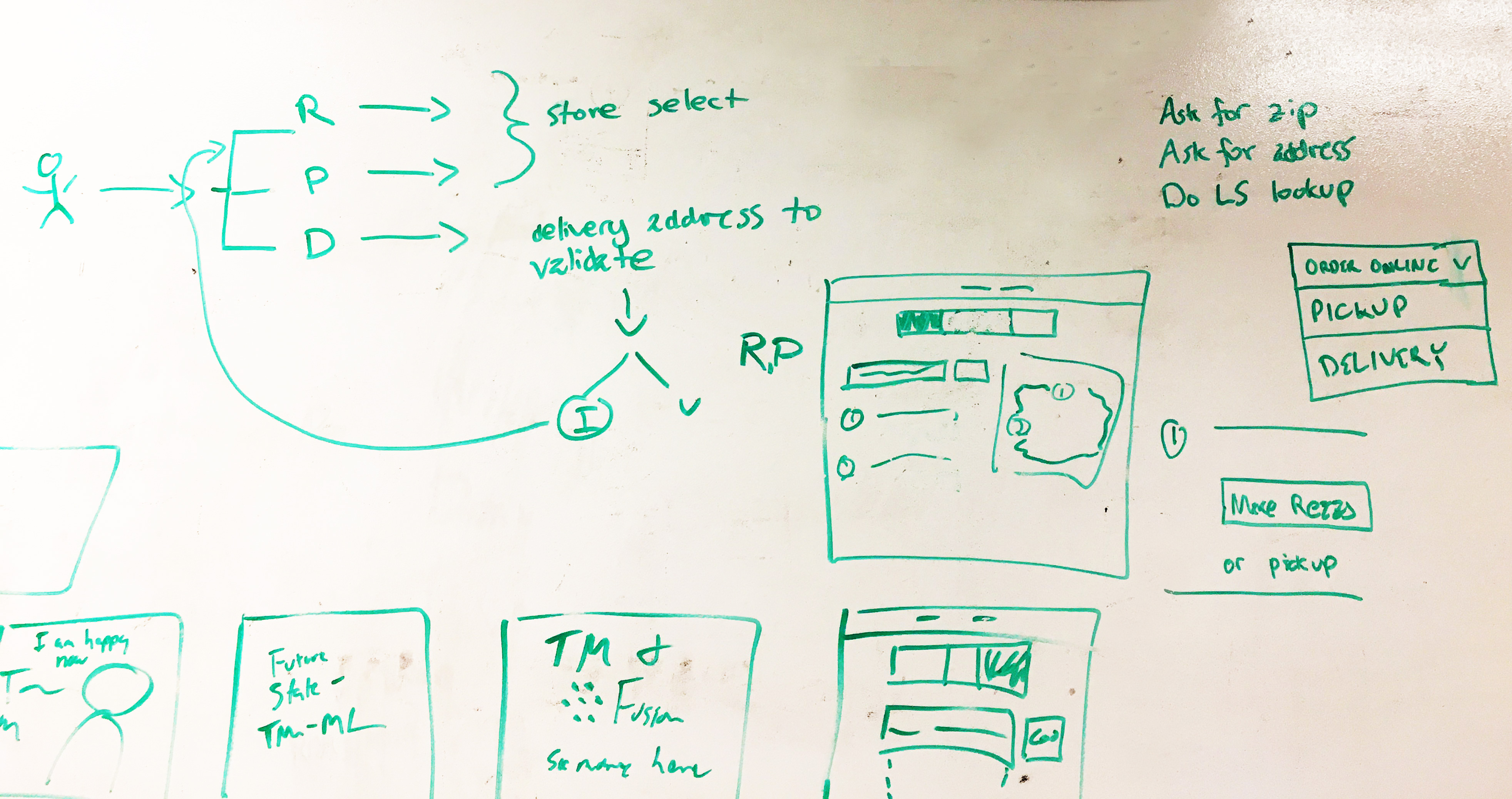
Note: The Cheesecake Factory leverages three different platforms to provide these services—and none offered quite the level of integration that we wanted. This simply meant that, at some point, we knew we were going to need to "hand users off" to a third party site to complete the transaction.
But, that didn't stop us from thinking through the entire decision flow for users who come to our site hungry.
Designing a better starting point
Knowing that guests would, eventually, land on one of three different platforms, we set out to offer the best on-site experience in the industry.
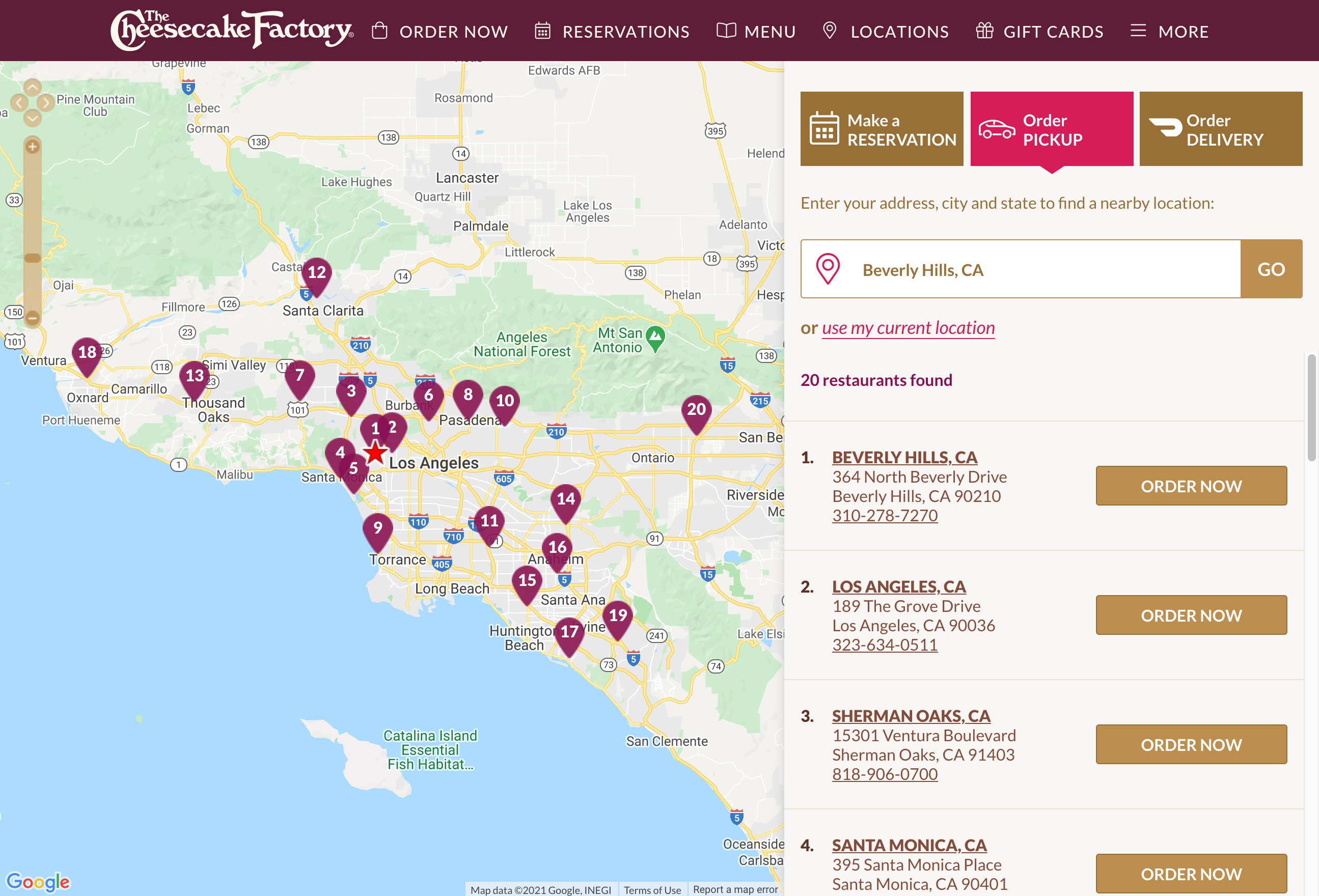
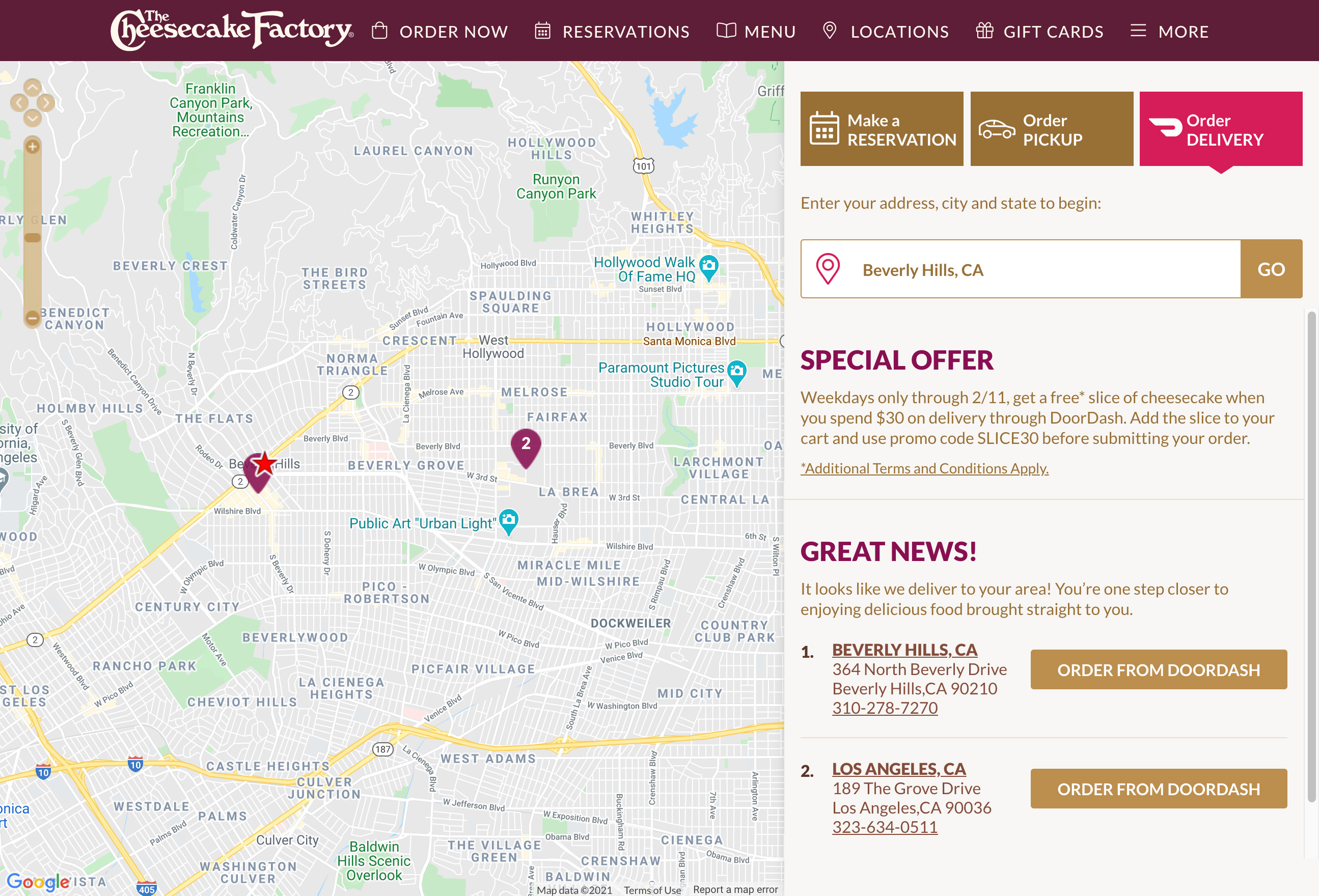
Though guests are unable to fully convert on the site, our solution improves on other approaches:
- Map- and list-based user interface to assist in location finding
- Visibility into all three options (reservations, takeout, or delivery). Guests can enter a location once and browse through various options—without having to click out and perform a new location search.
- An additional benefit of subtly "advertising" all three options.
- URL-accessible pages, for use in campaign destinations.
- Options to place a pickup order or make a reservation for users outside the delivery radius (the prior landing page simply gave an error and resulted in a "dead end"). This increases conversion by offering users "one more chance" before making the decision to order from a competitor.
The final product